
Disclosure: this article contains affiliate links. If you buy through them, AliCoinsDeals may earn a commission at no extra cost to you.
Few things rattle a new AliExpress shopper like a tracking page that hasn’t moved in a week. Most of the time the parcel is fine and the silence is normal. Occasionally it’s a sign to act.
This guide explains why AliExpress tracking freezes, where the silent gaps happen, and how long you should wait before doing something about it. Knowing the difference keeps you calm when a parcel is simply sitting in customs, and quick when it genuinely needs a dispute.
Key Takeaways
- The first tracking scan can take 3 to 7 days after a seller marks an order shipped, and slow economy shipping logs far fewer scans along the way.
- Most stalls happen at customs or at the handoff from Cainiao to your local courier, where no new scan appears until the local carrier scans the parcel.
- Whether you can claim depends on your order’s guaranteed delivery date, not on how long the tracker has been silent. After roughly 15 to 20 days with no scan, it’s worth checking the local carrier’s own tracker.
- A frozen tracker doesn’t cost you Buyer Protection. You can still open a non-delivery dispute once the delivery window passes.
Why Does AliExpress Tracking Stop Updating?
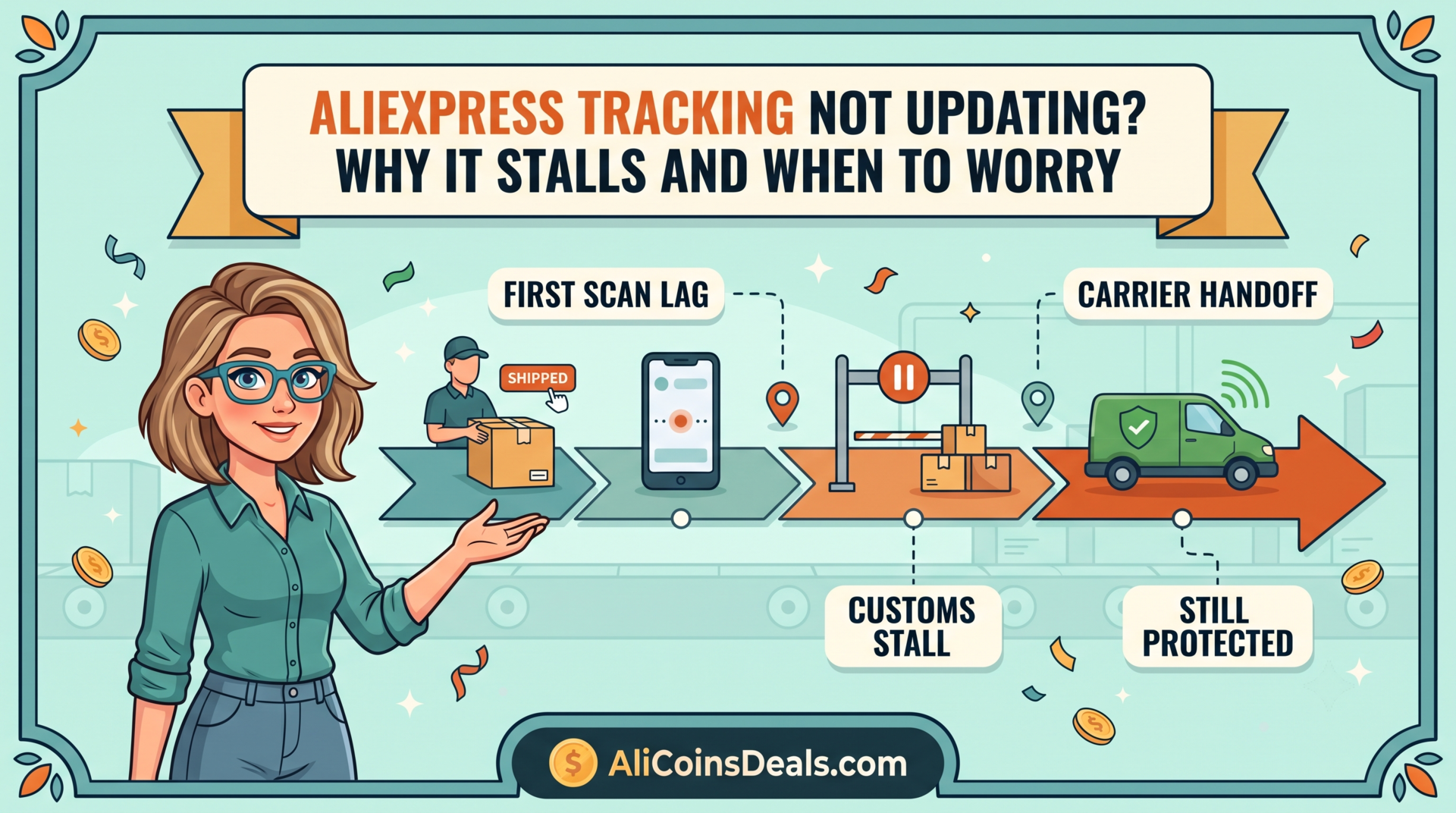
AliExpress tracking stalls because your parcel changes hands several times, and each carrier only scans it when it physically receives it. The two biggest silent gaps happen at customs, where a package can sit for one to two weeks in busy periods, and at the handoff from Cainiao to your local courier.
AliExpress relies on Cainiao, its logistics arm, to move parcels out of China and pass them to a delivery company in your country. Between those two systems there’s often a blackout. The Chinese leg goes quiet, and nothing new appears until your local courier takes the parcel and adds its own first scan. The package is moving. The tracking just isn’t.
Where Does Tracking Usually Go Quiet?
The first scan usually appears 3 to 7 days after the seller marks the order shipped, and economy methods log far fewer updates after that, so long gaps are built into the cheapest shipping. The silences cluster at three points:
- Before the first physical scan. A label exists, but the parcel is still waiting to be collected or consolidated.
- Awaiting a flight. Cheap shipping is consolidated air freight, and parcels queue until cargo space frees up.
- Between import customs and your local courier. The parcel has cleared into your country but produces no scan until the local carrier takes it.
The last one is where most trackers freeze, and it is the single most common reason people think a package is lost when it isn’t. If you want the exact status you are stuck on translated, see AliExpress tracking statuses explained, or enter the tracking number in our AliExpress tracker to see each event explained and whether it needs action.
How Long Is Normal Before I Should Worry?
It depends entirely on the shipping method you chose. Cainiao puts its Standard tier, which carries AliExpress Standard Shipping, at 10 to 18 days to key countries (Cainiao); on other routes or in peak weeks, budget up to about 45. Economy is 20 to 45 days per Cainiao, and the cheapest options can stretch toward 60. After roughly 15 to 20 days with no movement at all, check the local carrier’s own tracker. But the date that decides whether you can claim is your order’s guaranteed delivery date, not the length of the silence.
| Shipping method | Typical delivery window |
|---|---|
| AliExpress Standard Shipping | 10 to 18 days on key routes (Cainiao), up to about 45 |
| Cainiao economy / Super Economy | 20 to 45 days (Cainiao), can reach 60 |
| Express options, where offered | Often under 15 days |
So before you panic, check which method you actually paid for. A two-week gap on a 50-day economy parcel is routine. The same gap on an express order is not. Match your worry to the service, not to the calendar. For what each method should take from the start, see our guide to AliExpress shipping times.
How to Track an AliExpress Order Properly
Start with the order page in your AliExpress account, which shows the official status, then cross-check elsewhere when the official one lags. Our AliExpress tracker shows which local carrier has the parcel, so you can check that carrier’s own site directly. A tool like 17track is useful because it merges the Chinese leg and your local courier’s tracking into a single timeline.
The order page and Cainiao’s own tracking are your primary sources. When they stall, a third-party aggregator often shows a local-courier scan that AliExpress hasn’t synced yet. If even the aggregator stays blank for weeks, that’s a stronger signal than one quiet system, and it’s worth contacting the seller.
What Should You Do When Tracking Is Frozen?
First, as an informal rule of thumb, message the seller once the parcel has been silent for around 15 days, since they can often nudge the carrier or confirm the dispatch. Crucially, a frozen tracker does not cost you any protection. You can still open a non-delivery dispute once the guaranteed delivery window has passed.
If your Buyer Protection timer is running low while the parcel is clearly still in transit, ask the seller to extend it rather than letting it lapse. If the window closes with no delivery, that’s when tracking trouble becomes a refund matter. Walk through the evidence in our guide to what to do when a package never arrives, and the full process in how to open and win a dispute.
Frequently Asked Questions
Why has my AliExpress tracking not updated in a week?
A week of silence is usually normal, especially at customs or during the handoff from Cainiao to your local courier. No new scan appears until the next carrier physically receives the parcel. On economy shipping, week-long gaps are built in. After about 15 to 20 silent days, check the local carrier’s tracker, and keep an eye on the guaranteed delivery date, which is what decides whether you can claim.
Does tracking not updating mean my package is lost?
Rarely. A frozen tracker almost always means the parcel is between carriers or waiting on customs, not lost. Check which shipping method you chose, since economy services log few scans. If the official tracker stalls, a tool like 17track may show a local-courier update it hasn’t synced yet.
How long until an AliExpress order is considered lost?
There’s no single number, because it depends on the guaranteed delivery window for your order. You can only open a non-delivery dispute after that window passes. In the US, for eligible orders under its Fast Delivery guarantee, AliExpress sets it at 20 days after shipment for US-stocked items and 30 days for cross-border ones (AliExpress, August 2026). How that guarantee works is in the On-Time Delivery guarantee, and how long the money takes is in AliExpress refund time. Outside the US, use the Delivery Days on the product page.
Can I still get a refund if tracking never updates?
Yes. A stalled tracker doesn’t affect Buyer Protection. Once the delivery deadline passes without the parcel arriving, you can open a non-delivery dispute and claim a full refund. If the timer is close while the item is still moving, ask the seller to extend protection instead of letting it expire.
Should I confirm receipt if my package hasn’t arrived?
No. Never tap “Confirm Receipt” for an item you haven’t received. Doing so can shorten your recourse and tells AliExpress the order completed. Wait for the parcel, or open a dispute if the delivery window passes, so your protection stays fully intact.
A quiet tracking page is part of normal AliExpress shipping, not a crisis. Check your shipping method, translate the status you are stuck on with our status-by-status guide, give customs and carrier handoffs time, and lean on a second tracker when the official one stalls. Keep an eye on your Buyer Protection deadline, and you’ll always know when patience ends and a dispute begins.
Check where your parcel really is
Paste your tracking number into our free tracker to see which carrier has your parcel and what its latest status means.