Disclosure: this article contains affiliate links. If you buy through them, AliCoinsDeals may earn a commission at no extra cost to you.
Makeup is one of the few AliExpress categories where a bad buy can affect your health, not just your wallet. Cosmetics go on your skin, lips and eyes, so what’s actually in them matters far more than the price.
This guide takes an honest look at the risks. It covers what’s been found in counterfeit cosmetics, which categories are reasonable to buy and which to avoid, and how to protect yourself when a deal looks too good.
Key Takeaways
- US Customs seized counterfeit branded skincare in 2025 and warns that fake cosmetics can contain chemicals linked to cancer and other harm.
- Lab tests of counterfeit makeup have found high levels of lead, plus arsenic, mercury and bacteria. Skin-lightening creams are a known mercury risk, per the FDA.
- US law doesn’t require cosmetics to carry expiry dates, so cheaply shipped products may have no reliable shelf life. Eye makeup has the shortest safe window.
- Tools and accessories like brushes and sponges are lower-risk. Anything applied to skin, eyes or lips, especially fakes of real brands, deserves the most caution.
Is AliExpress Makeup Safe?
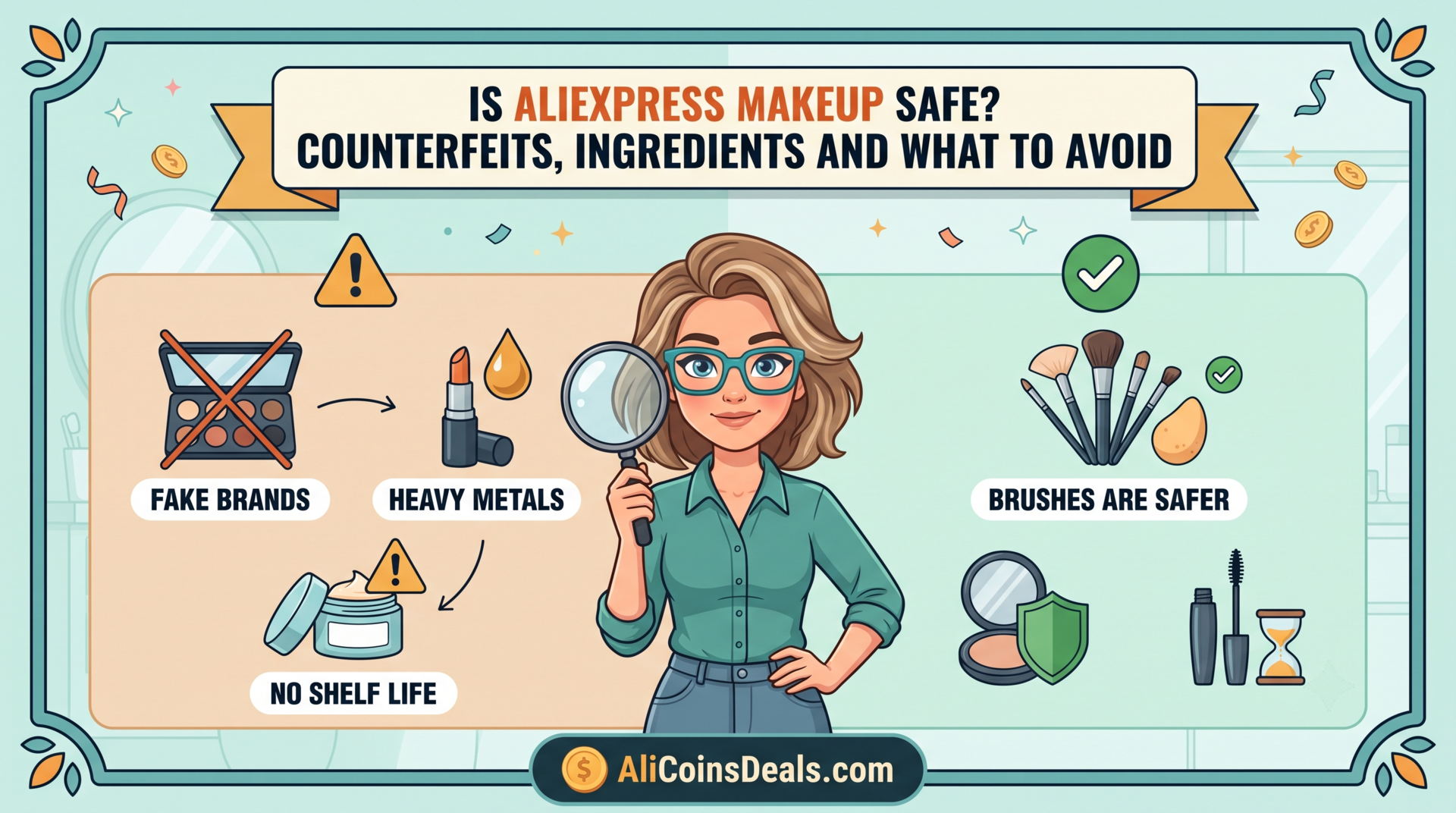
It splits sharply by category. Tools and accessories such as brushes, sponges and organizers are generally fine, because the worst case is poor quality rather than something absorbed into your body. Anything applied to your skin, eyes or lips is a genuine risk, particularly counterfeits of real brands.
The core problem is verification. On a marketplace of unbranded and reseller listings, you can’t easily confirm what’s in a product or whether a “branded” item is genuine. That uncertainty is manageable for a makeup brush and serious for an eyeshadow, which is why the category you’re buying matters so much.
What Has Been Found in Counterfeit Cosmetics?
The documented findings are alarming. In early 2025, US Customs and Border Protection seized counterfeit branded skin creams shipped from Hong Kong and China. It warned that some counterfeit cosmetics contain chemicals known to cause cancer and other health issues. That’s the current, on-the-record concern, not a rumor.
Lab testing backs it up. Analyses of seized fakes have found counterfeit makeup with several times the lead of the genuine product, alongside arsenic and mercury. One widely reported Los Angeles seizure turned up bacteria, after buyers developed rashes. Separately, the FDA warns that mercury in skin-lightening creams is absorbed through the skin and can cause kidney and neurological damage. Its guidance on mercury in skin products is worth reading before buying any whitening product.
Is Unbranded Makeup Safer Than Counterfeit Branded?
A fake of a real brand is the riskier of the two. It actively impersonates a tested, regulated product while bypassing every one of that brand’s safety controls, so you think you’re getting quality assurance you simply aren’t. Counterfeiters have no reason to test what they sell.
Unbranded cheap cosmetics aren’t automatically safe either, but at least they aren’t lying about what they are. It’s worth knowing that US cosmetics are largely self-policed, with no premarket FDA approval even for legitimate products. So a professional-looking listing is never a safety guarantee, and a counterfeit only stacks deception on top of that.
Does Cheap Makeup Expire?
Often you can’t tell, and that’s the problem. US law doesn’t require cosmetics to carry an expiration date, so cheap or grey-market products may arrive with no reliable shelf-life information at all. Look for the small open-jar “PAO” symbol that shows how many months a product lasts once opened.
Eye products are the biggest concern. Mascara and eyeliner have the shortest safe life, often just a few months after opening, and contamination can cause serious eye infections. Long, un-temperature-controlled shipping doesn’t help, since heat degrades preservatives and speeds up bacterial growth. For anything that goes near your eyes, freshness is a safety issue, not a nicety.
What Should You Buy, and What Should You Avoid?
Match your caution to where the product goes. The split is fairly clean once you frame it that way.
- Lower-risk: brushes, sponges, applicators, mirrors and organizers. The failure mode is durability, not contamination.
- Higher scrutiny: anything applied to skin, eyes or lips, especially counterfeits of name brands.
- Avoid: skin-lightening or whitening creams, given the documented mercury risk, and any branded makeup priced far below retail.
If you want a specific branded product, buy it from the brand or an authorized retailer. Not from a marketplace reseller offering it at a steep discount.
How to Protect Yourself
Treat a deep discount as a warning, not a win. A heavily discounted “designer” cosmetic is one of the clearest signals of a counterfeit, so if a price looks too good for a real branded product, it probably isn’t real. When you’re unsure whether something is authentic, the safest move is simply not to buy it.
Beyond that, three habits. Read the label for mercury-related terms like “calomel” or “mercurio” and stop if you see them. Patch test anything new before full use. And never add water or saliva to thin a product. Vet the seller with our 60-second seller check, and if a “branded” item arrives clearly fake, Buyer Protection lets you claim a refund.
Frequently Asked Questions
Is it safe to buy makeup on AliExpress?
It depends on the product. Brushes, sponges and accessories are generally fine. Anything applied to skin, eyes or lips carries real risk, especially counterfeits of real brands, which lab tests have found contaminated with lead and other harmful substances. You can’t reliably verify ingredients on a marketplace, so buy applied cosmetics with caution.
Can fake makeup actually be dangerous?
Yes. US Customs warns that counterfeit cosmetics can contain chemicals linked to cancer and other harm, and lab tests of seized fakes have found high lead levels plus arsenic, mercury and bacteria. Skin-lightening creams in particular carry a documented mercury risk. The danger is concentrated in counterfeits and unregulated applied products.
Are AliExpress dupes of branded makeup real?
A genuine product sold far below retail by a marketplace reseller is usually either counterfeit or grey-market. Counterfeits impersonate the brand while skipping all its safety testing. If you want a specific brand, buy from the brand or an authorized retailer. Treat steep “designer” discounts on AliExpress as a counterfeit warning.
How can I tell if AliExpress makeup has expired?
Often you can’t, since US law doesn’t require expiry dates on cosmetics. Look for the open-jar PAO symbol showing months-after-opening, and be strict with eye products, which have the shortest safe life. Heat during long shipping degrades preservatives, so old or poorly stored makeup is a genuine infection risk.
What makeup is safest to buy on AliExpress?
Non-applied items are safest: brushes, sponges, applicators, mirrors and storage. Their main risk is quality, not contamination. Avoid skin-lightening creams entirely, and treat any branded makeup at a suspicious price as a likely counterfeit. For anything applied to your face, authenticity and freshness matter more than the saving.
Cosmetics share that risk profile with jewellery, where lead and cadmium turn up in unmarked alloys, and with mains chargers, where a counterfeit is a fire risk rather than a poor purchase.
Makeup is where the usual AliExpress bargain hunting needs a harder line. Stick to tools and accessories with confidence, treat anything applied to your face with real caution, avoid counterfeits and skin-lightening products, and walk away when authenticity is in doubt. On cosmetics, the cheapest option is rarely worth the risk.
Ready to unlock massive savings?
Don't pay full price on AliExpress. Use our free coin converter to find hidden discounts up to 90% off.